
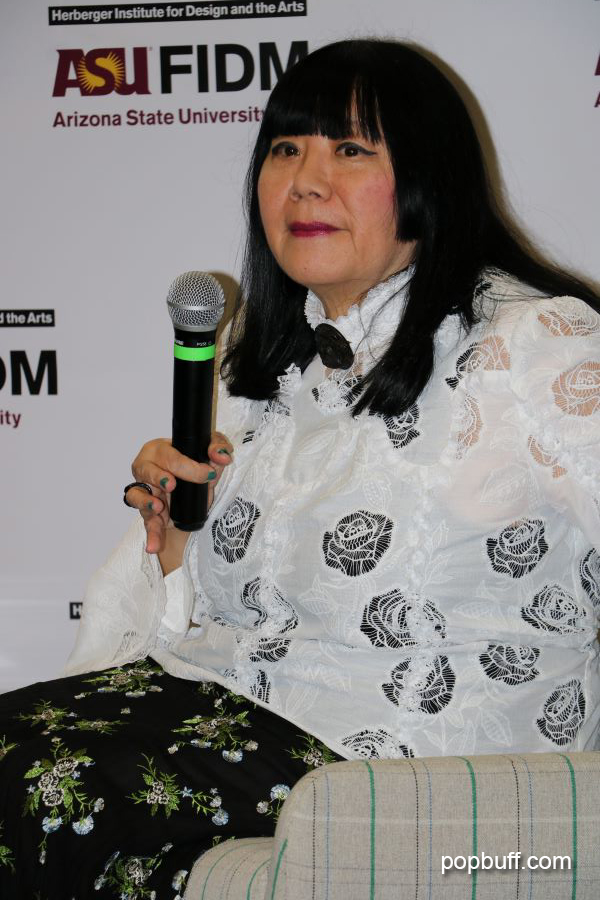
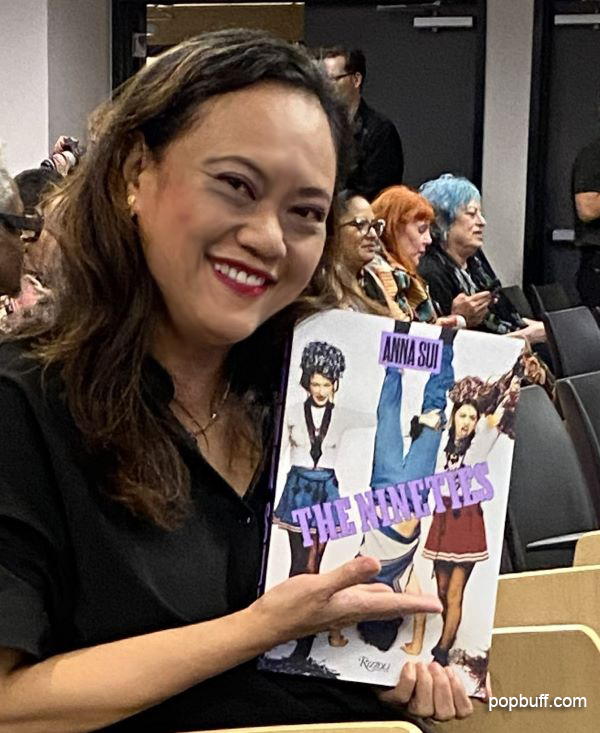
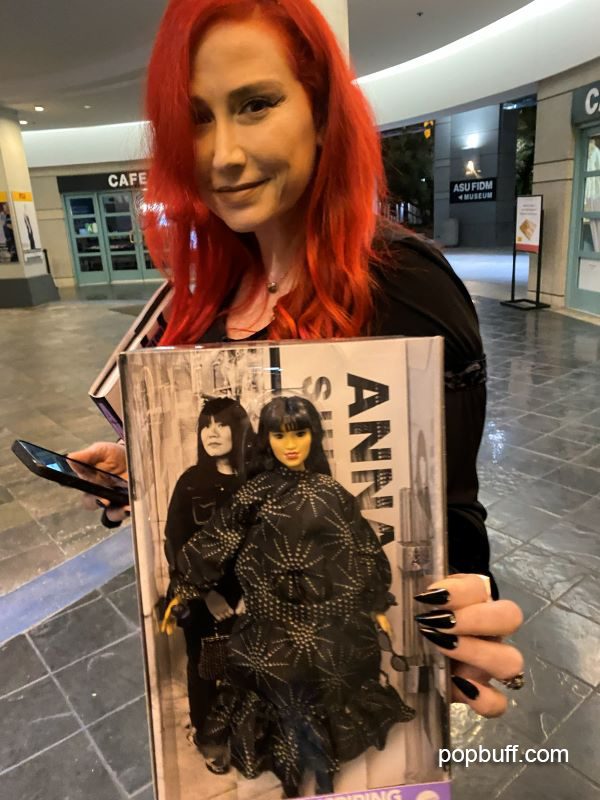
I was thrilled when I heard about the book signing for Anna Sui and her new book, The Nineties. What better place to celebrate a fashion book than at the ASU FIDM in Los Angeles—a setting that perfectly reflects creativity, style, and the next generation of fashion talent.
My love of fashion goes back to my childhood in the Philippines. Even in elementary school, I was already flipping through magazines like Seventeen, Teen, and Young Miss, often picked up at the supermarket or the U.S. commissary. My late father had served in the U.S. Navy, which gave our family access there, and those magazines became an early window into American style and culture. By the time I moved to the United States in the 1990s, my taste had evolved, and I found myself immersed in Vogue, Mademoiselle, and Harper’s Bazaar. It was impossible not to notice Anna Sui’s unforgettable designs splashed across those glossy pages, worn by legendary supermodels like Linda Evangelista and Naomi Campbell. Her fearless creativity instantly made me a fan.
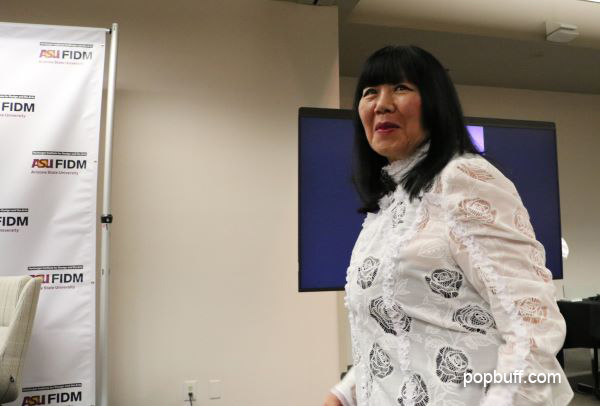
What always set Anna Sui apart was how she blended fashion with music and pop culture. In The Nineties, she revisits a decade that shaped so many of us—a time of supermodels, grunge, individuality, and cultural shifts. For me, the 1990s were the soundtrack of Nirvana, Pearl Jam, Soundgarden, Weezer, and Stone Temple Pilots—an era whose influence still shapes my taste in music today. That same rebellious, expressive spirit lived in Anna Sui’s designs, which is why her work resonated with me from the very beginning.
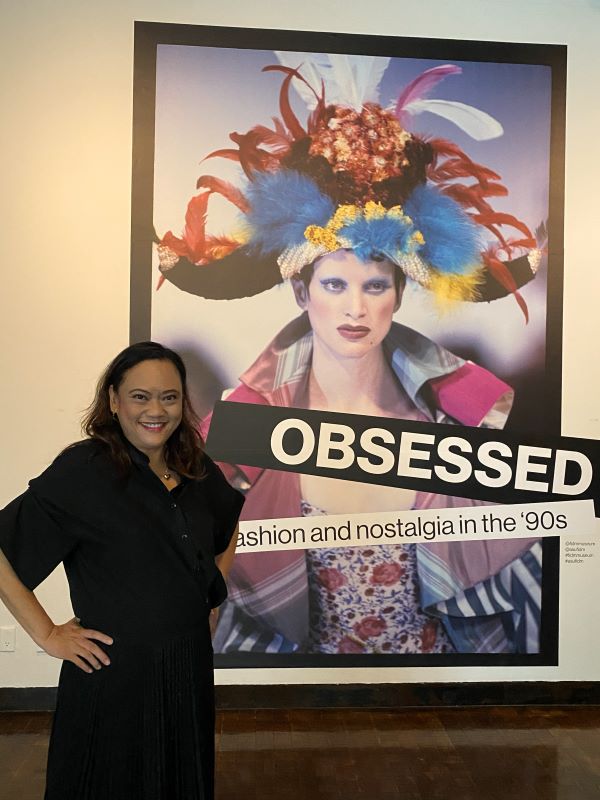
The timing of The Nineties could not be better. Nostalgia for the decade is everywhere, with 1990s fashion trends resurging on social media, along with renewed popularity of Goo Goo Dolls music, and the hit Love Story on FX, set in the 1990s and chronicling the romance of John F. Kennedy Jr. and Carolyn Bessette-Kennedy. It was also the perfect setting, as ASU FIDM Museum is currently presenting “Obsessed: Fashion and Nostalgia in the ’90s,” an exhibition that looks back at the pivotal moment when analog culture met the dawn of the internet through the work of designers such as Vivienne Westwood, Jean Paul Gaultier, Anna Sui, Franco Moschino, and Gianni Versace, among others. The exhibition highlights how 1990s fashion continues to inspire today’s creatives as a counterpoint to our digital age, and runs through June 27, 2026.
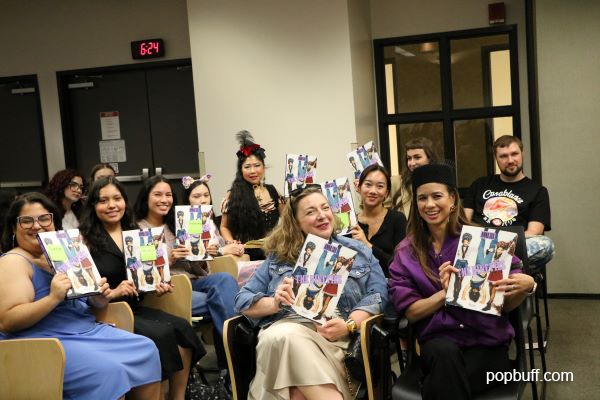
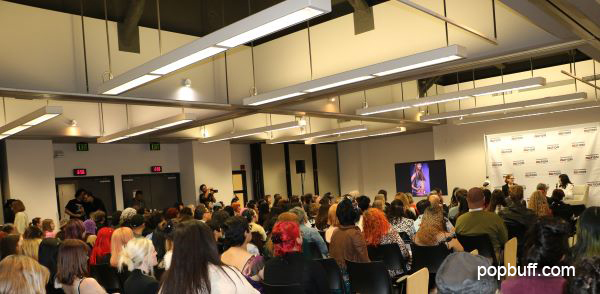
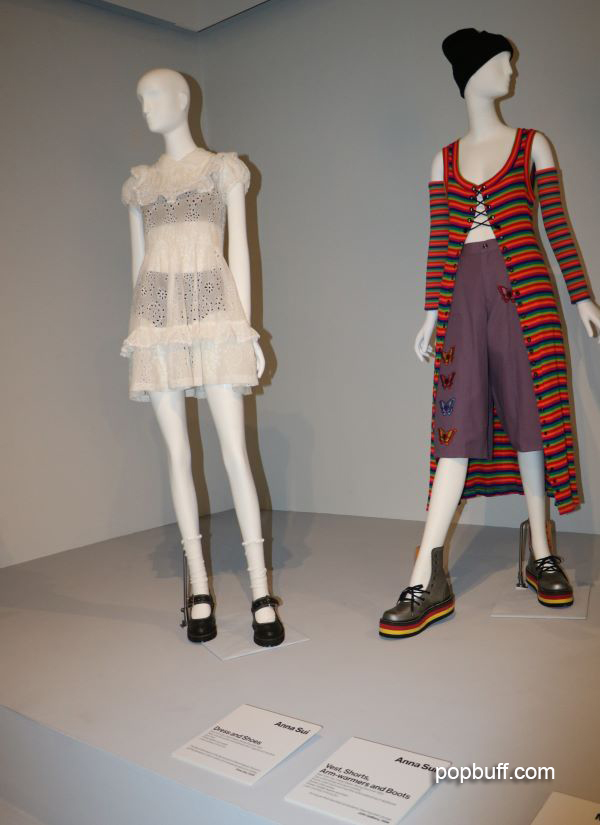
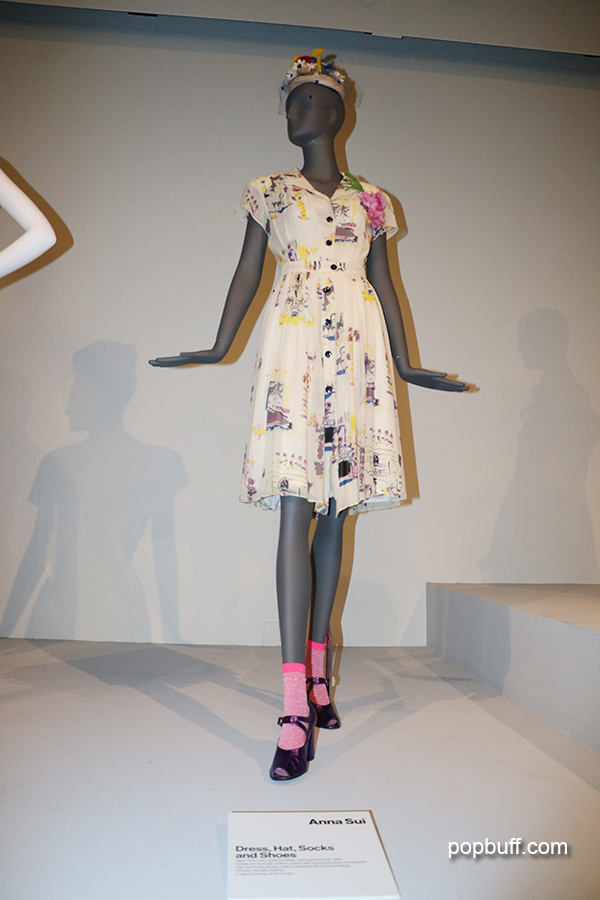
After the conversation, guests moved into the museum, where several of Anna Sui’s creations were on display. With a DJ spinning, light bites being served, and a packed crowd of fashion students, Gen Xers like me, millennials, and younger fans, the evening felt like a celebration of style across generations. It was, simply put, a happy place for fashion lovers.
Anna Sui perfectly captured the creative spirit of 1990s fashion, but her story began long before that decade. Raised in Detroit, she knew from an early age that fashion was her calling and was accepted into Parsons School of Design while still in high school. After studying there, she worked alongside friend and legendary photographer Steven Meisel, designed for sportswear labels, and launched her own line in 1981. What made Anna Sui stand out was her fearless ability to blend vintage glamour, rock-and-roll edge, bohemian romance, and pop culture into a style all her own. Her runway shows became must-see events, known for their energy, unforgettable soundtracks, and downtown cool attitude. With the support of friends Naomi Campbell and Linda Evangelista, she debuted her first runway show in 1991, helping launch a remarkable rise that made her one of New York’s most beloved and influential designers. Even today, Anna Sui remains admired for staying true to her independent vision while inspiring generations of fashion lovers around the world.
Anna Sui’s creative vision was also shaped by her upbringing on the outskirts of Detroit, where she experienced a classic all-American pop culture childhood infused with music and style. Growing up in a city that welcomed virtually every major touring act of the era, she became obsessed with rock music and started attending concerts at a young age. That early connection between fashion and music would later define her signature aesthetic. As Anna Sui shared, “I wanted to design clothes for rock stars and people that went to rock bands and that was my whole objective about doing clothes.” That passion for self-expression, individuality, and rock-and-roll energy became one of the reasons her designs stood apart and resonated with generations of fans.
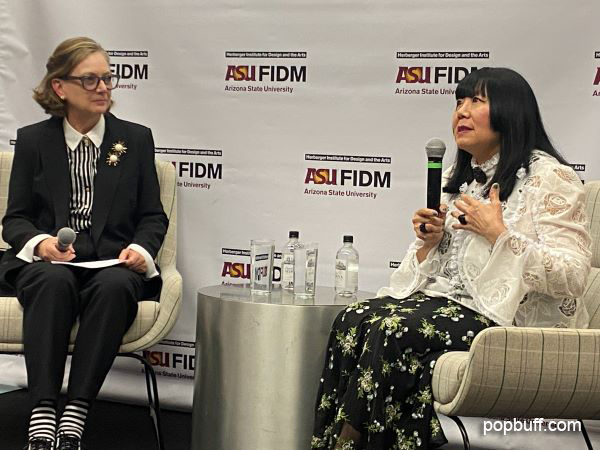
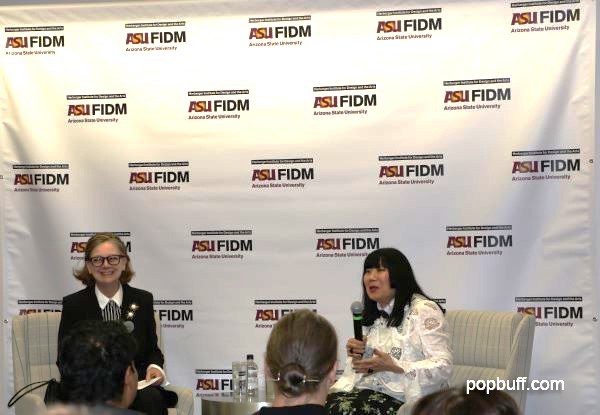
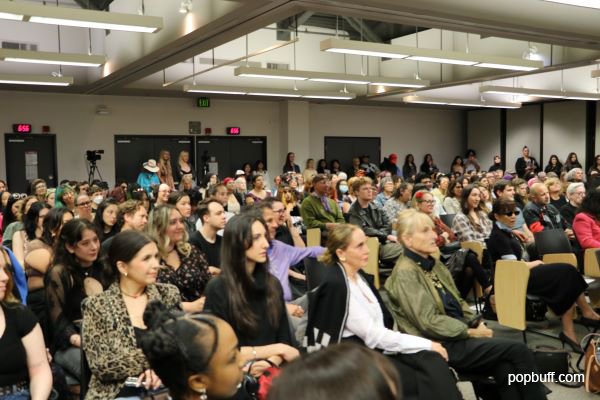
Here I am at FIDM, covering the conversation between Anna Sui and interviewer Dennita Sewell, Director of the ASU FIDM Museum. The discussion offered a fascinating look into Anna Sui’s career, inspirations, and the creative energy behind her new book, The Nineties.
This Q&A featured insightful exchanges between Dennita Sewell and Anna Sui, giving guests a front-row seat to fashion history and personal stories from one of America’s most iconic designers. Here are some of the highlights I covered—read on.
Dennita Sewell: What was your first job?
Anna Sui: I worked at a company called Charlie’s Girls. I had read about her, and there was this kind of underground magazine called Rags, and they talked about Erica Elias. Then all of a sudden, in my junior year, I overheard two seniors talking about a job opportunity at Erica Elias’ Charlie’s Girls, and I ran up there with my portfolio—and I got the job.
Dennita Sewell: Oh, that’s impressive. How exciting. What did you do?
Anna Sui: Well, it was pretty unique because she had a design room, and I worked with a pattern maker and two sewers. There were four different divisions, and I was able to design for all four divisions, just feeding ideas. So it was such great training. Plus, she was one of the toughest bosses in the business, so I really got disciplined very fast.
Dennita Sewell: So I know that you really enjoy research, and we’ve just been in the archive, which is right here in this building—a terrific resource for our museum. What are some of your favorite periods, and why are you drawn to historic clothes? Talk to us a little bit about what inspires you.
Anna Sui: Well, I guess my favorite periods are the ’60s and the ’70s. And actually, we had the really big pleasure of seeing some Rudy Bernhardt things and Thea Porter. So I love all those British designers from the ’60s and ’70s.
When I did my first collection, it was really inspired by my love of Seventeen magazine and the back-to-school issue. So if you look at that collection, you’ll see that it’s very much mod fashion from the ’60s that we did in vinyl, in really primary colors of red, black, and yellow. And I think that a lot of my collections were really inspired by what I dreamt about as a kid.
Dennita Sewell: And how do you interpret something? What is your process of looking at those inspirations and then translating it into your own voice?
Anna Sui: I think I’ve got the best job in the world because there’s actually no boss, so I can do what I want. I get inspired by a movie, a book, or even putting ideas together that way. But I also love fashion, love the trends, love following what other people are doing. So I’m very mindful about what’s on trend, what’s coming up, and what I think is exciting and new that’s going to happen in fashion.
So all those things get mixed together, and hopefully they come out in collections that people want.
Dennita Sewell: Do you start by sketching a mood board? What’s your first go-to action?
Anna Sui: I always build a mood board, and I start collecting images that I love and start thinking about a color story, selecting the photographs and images to match the color story that I’m trying to build. I’ll do really extensive research on that—spend weekends just going through books and going through images that I’ve saved.
Then I’ll build a whole board that tells the story of what I want the collection to be, and I keep referring to that so it keeps me on track throughout the collection. Or else, it kind of gets too convoluted with two big ideas. This keeps me focused.
Dennita Sewell: What inspires you today?
Anna Sui: It really depends on what’s going on. I remember most of my early collections were about nostalgia—looking back and thinking about what I missed out on in the ’60s or the ’70s. Then suddenly, when grunge happened, it was a period when all the arts really changed. There were all these new bands coming out of small cities like Seattle or Chicago, and they were being played on college radio. There were also all these indie filmmakers creating some of the most innovative films.
I think fashion kind of flipped as well. When Marc and I and other designers did the grunge collections, it really turned fashion on its head. They didn’t quite know where to put us or what to do with it, but it really resonated with that generation. I think the models really liked it too. Suddenly they had clothes for their generation, not their mothers’ generation. They were so used to wearing power suits and feeling like they were dressing as older people. Suddenly they had clothes they really wanted to wear themselves.
Dennita Sewell: And that sounds like such a magical time. How did it come about? What gave you the spark to go in that direction, that particular look?
Anna Sui: Yeah, there were certain things that happened. I remember that summer I was friendly with Linda and Naomi because of Steven Meisel, and I was so used to seeing them dressed head to toe in Chanel or Versace. Then that summer, Linda started calling me because she wanted some of my babydoll dresses. She went to couture and started wearing all these lace babydolls. Then other models started calling me from Paris asking for dresses, so we were shipping dresses to them in Paris.
It got to the point where I heard Karl was complaining that everyone was wearing my dresses. Then that fall, I went to Paris Fashion Week for the first time with my friend Steven Meisel. We stopped at the Ritz to pick up Linda, and she came running out with her coat on. We jumped in the car and went to the Gaultier show. She sat down, took off her coat, and said, “Anna, I have a surprise for you.” She was wearing my dress.
Before that, I had seen shopping bags and racks of clothes from every French designer, and I was so jealous. I thought, my God, everybody’s throwing clothes at her—she could have anything. And then she was wearing my dress at the show. So there were a few things that gave me the confidence that maybe I could do a show.
Dennita Sewell: The collection was actually really shocking to the fashion press, and there was a lot of criticism around it. How did you and Marc and others process that, deal with it, and how did that impact how you moved forward?
Anna Sui: I think we were really doing what we believed in. When it started resonating with a different generation, it was moving fashion forward. I think the old guard were shaken by what was going on.
At that point, there was no place to put my collection in department stores because it wasn’t going to sit next to Calvin. So I always ended up being placed next to the escalator—they just didn’t know how to house me in a department store.
Dennita Sewell: And now that so much time has passed, and there’s nostalgia for that period, how do you reflect on it now? What kinds of things do you think about in relation to it today?
Anna Sui: One of the really interesting things is that younger journalists, students, and a lot of Gen Z people who are interested in fashion always ask me what those times were like.
You know, this was pre-digital. We didn’t have the internet. We had answering machines. The way we found out information was by going out, hanging out, and word of mouth. Someone would tell you there was going to be a party, or that a band was coming to town. Everything was very organic and genuine.
When you went out, there were lots of people you knew at restaurants. It wasn’t like now, where you go somewhere and don’t know anyone. Everybody kind of knew where to go. You’d learn what was happening around town. A model would be dating a new actor and bring him backstage. It was all very organic, and nothing felt forced.
Dennita Sewell: Well, you talk a lot about this very rich creative period in your life in your Nineties book. Your friends Marc Jacobs, Sofia Coppola, Christy Turlington, and many others from that era are quoted or interviewed. How did you approach those reflections and getting that input for the book, and how does it translate into advice for students today?
Anna Sui: My friend Eileen Gallagher conceptualized the idea. She usually curates exhibitions—she did the Rolling Stones exhibit and the Jean-Michel Basquiat one that was in New York and L.A. She said, “I want to do a book on the ’90s with you.” She conducted all those interviews, and that’s how it came about. She also came up with topics like the slip dress and the music scene, so it was really her idea of how to present the ’90s.
I think one of the things people take away from the book is how genuine it all was. It wasn’t a commercial venture for everyone. A lot of those relationships came out of friendship and camaraderie. People gathered together and really spent time with each other. We weren’t isolated with our phones and computers—we went out, we hung out. It was a different time.
Dennita Sewell: How did that affect your creativity?
Anna Sui: I think socializing really energizes you, and you start being influenced by the way people are dressing. We were dressing for each other. We were trying to impress one another. You’d see someone put something together and think, “Oh, I could do that—but maybe I could do it a little differently.” Ideas were constantly being passed around. Everybody kind of had the same objective: having a good time, but also looking good.
Dennita Sewell: We’re going to see the exhibition afterward, and back to the grunge collection—we’re lucky enough to have some pieces downstairs. They were some of the hardest pieces to find, and I really applaud Christina and all the hard work she put into finding them. Do people approach you about them? Do you have them in your archive? Do people collect them exclusively? Talk to us about that.
Anna Sui: We have most of them, but not all. Some were already donated to places like the Metropolitan Museum. But the exciting thing was that so many people were asking for them that we ended up recreating some pieces.
First, for my traveling exhibition, the opening ceremony chose ten different outfits and wanted to sell them, so we recreated those. Then a year later, Marc Jacobs decided he wanted to produce his grunge collection again. Actually, it had never really been produced—it was just the fashion show. He also asked for ten outfits from my grunge collection, and we recreated those for his store too. I think one of the outfits downstairs at Marc Jacobs is from that reissue.
Dennita Sewell: Yes, the reissue. It’s exciting to see. We’re here at Arizona State University’s school, and we have lots of fashion students in the room. I’d love to take a moment to speak to them. What skills do you look for, what advice would you have for them—and are you interviewing? I’m sure that’s a big question.
Anna Sui: Well, yeah. Mostly we need people with technical skills like pattern making. We’re always looking for sewers, cutters, people with those technical skills. A lot of assistants don’t even have the experience we learned in school, where we had to drape and make patterns. It’s unfortunate that many schools aren’t teaching that. It seems almost like a dying art, and I wish there were much more training in those skills. They’re so important
We’re always looking for new recruits. Another thing people ask me is how I’ve stayed designing for so long. I think it comes down to dedication. You have to give up certain things and decide what’s important. The most important thing for me was learning my craft and learning my resources. In those early jobs, I learned how to work with drapers and sewers. It’s always a team effort. Just because your name is on the label doesn’t mean you’re making the clothes. There’s a whole team behind it. When you do fashion shows, the team gets even bigger. It’s all group effort, working together, and organization.
So many people are isolated with just their computers and thinking only about themselves. You really have to open yourself up and understand there’s a whole world out there you need to learn to work with. You can’t just decide you’re going to do it your way. There’s a system.
Dennita Sewell: Thank you for that. I know they’ll all remember it. As you look at your own creative circles now—you described a circle you once had—who is in your creative circle now?
Anna Sui: The same people too, but it really comes down to my team now because we spend so many hours together working on collections. It’s such a big challenge at this point because when I first started in the ’90s, all the fabrics we used were made in the United States. That all got outsourced to other countries.
Now a lot of our time is spent researching and trying to find fabrications and fabrics where we can afford the minimums, the price, and the timing. It used to be much faster waiting for a roll of fabric from Massachusetts than waiting for one from China. A lot of it is scheduling and balancing. These last few years have been so challenging with tariffs and shipping problems. You continually have to juggle everything and figure out how to make things work because you’re problem-solving all the time.
Dennita Sewell: Why do you think there’s such nostalgia for the ’90s right now?
Anna Sui: I think people are realizing that maybe that was the last moment before everything went digital. There was camaraderie, communication, genuine searching, socializing, and really spending time together. I think the computer world has isolated us, and we’ve become so self-involved rather than trying to be part of a bigger group of people.
When it was time for audience questions, I was thrilled to be the first person called on to ask Anna Sui a question. I asked, “What surprised you the most while putting the book together?”
Anna Sui replied, “What surprised me the most? How hard it was. I mean, as I said, Eileen conceptualized it, but I had to find all the missing parts and find those photos, and find the sketches and all those things. And I was never very organized in keeping all those things. I kind of just threw them in boxes and drawers. So it was a lot of digging and trying to find them, but I unearthed a lot of things I didn’t remember I had, and it would spur on another idea.”
After the discussion, guests made their way to the museum galleries, where they were able to view Anna Sui’s designs up close, alongside other fashion pieces that helped define the style and spirit of the 1990s. It was the perfect continuation of the evening—seeing on display the very era that had just been brought to life through stories, memories, and creative insight.
Attendees eagerly took advantage of the many photo opportunities throughout the exhibit, capturing memorable moments among the iconic looks and immersive displays. The energy in the room was filled with admiration, nostalgia, and appreciation for a decade that continues to inspire fashion today.
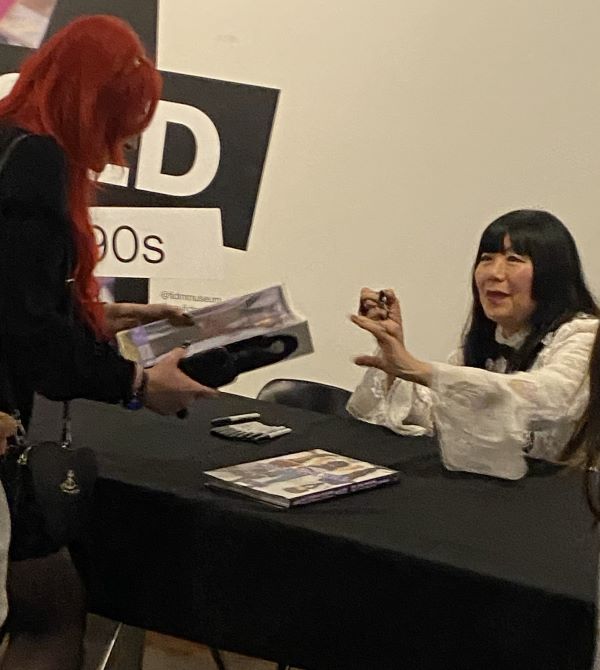
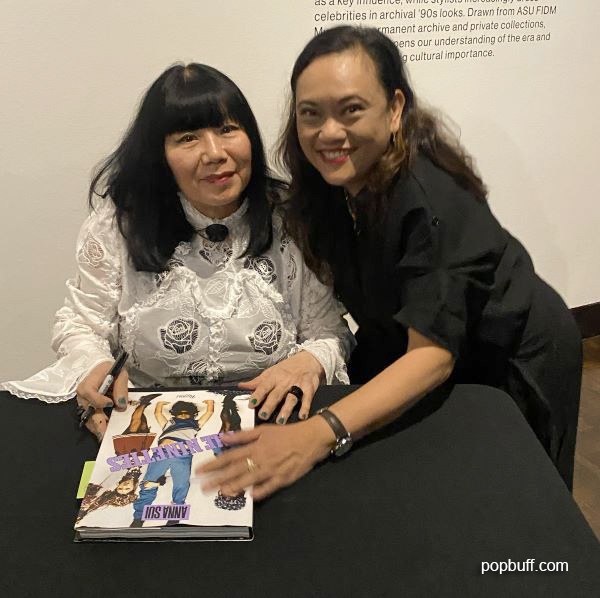
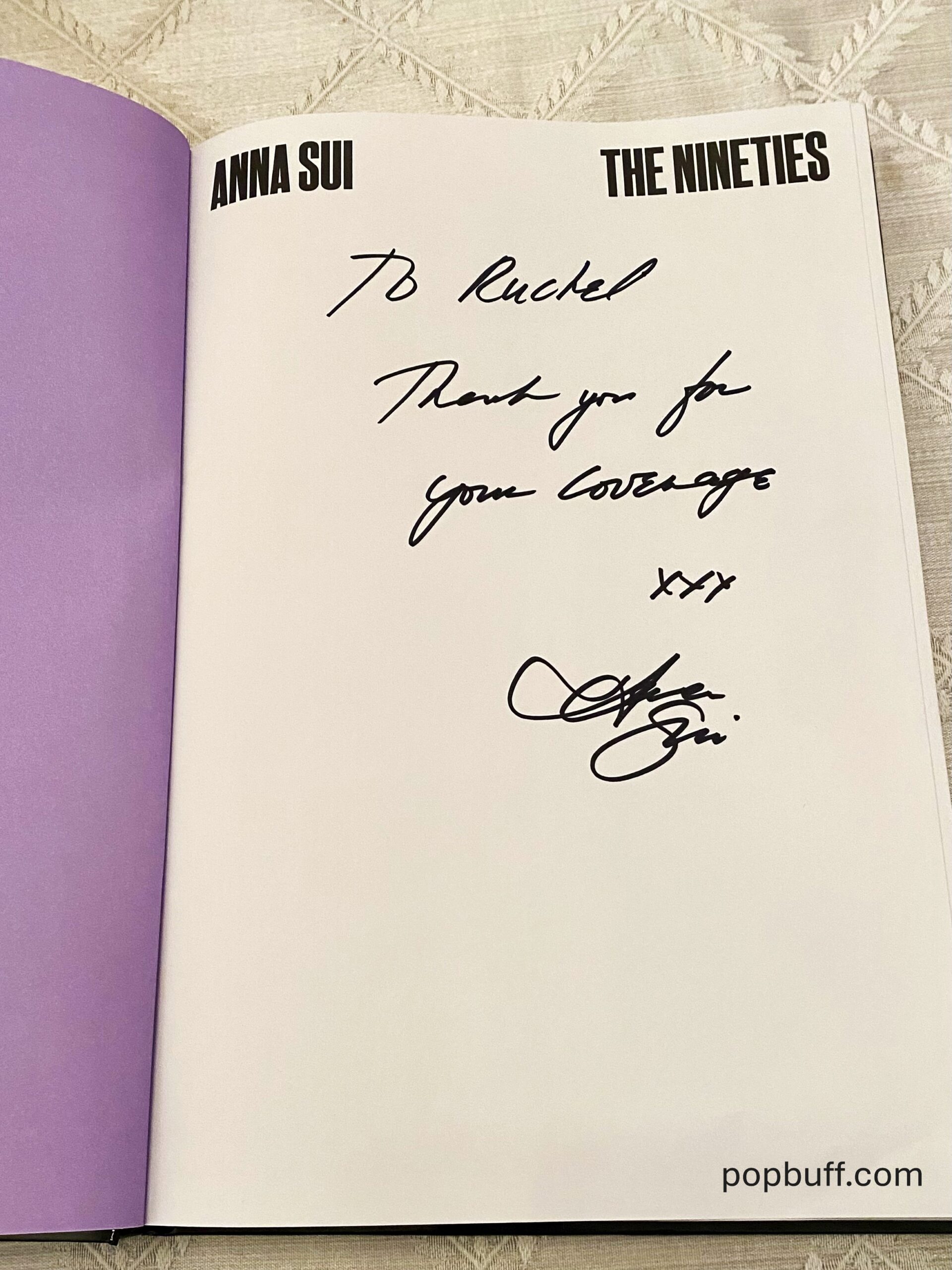
For me, one of the most special moments of the night came during the book signing. I told Anna Sui that I was covering the event, and she graciously wrote in my book: “Ruchel, thank you for your coverage.” It was a thoughtful gesture from a legendary designer and the perfect ending to an unforgettable evening celebrating style, creativity, and the enduring magic of the 1990s.
For more details about Obsessed: Fashion and Nostalgia in the ’90s, click here.
Discover more from POPBUFF
Subscribe to get the latest posts sent to your email.


